Bahrain in Wartime: Arrest Campaign Between National Security and Freedom of Expression
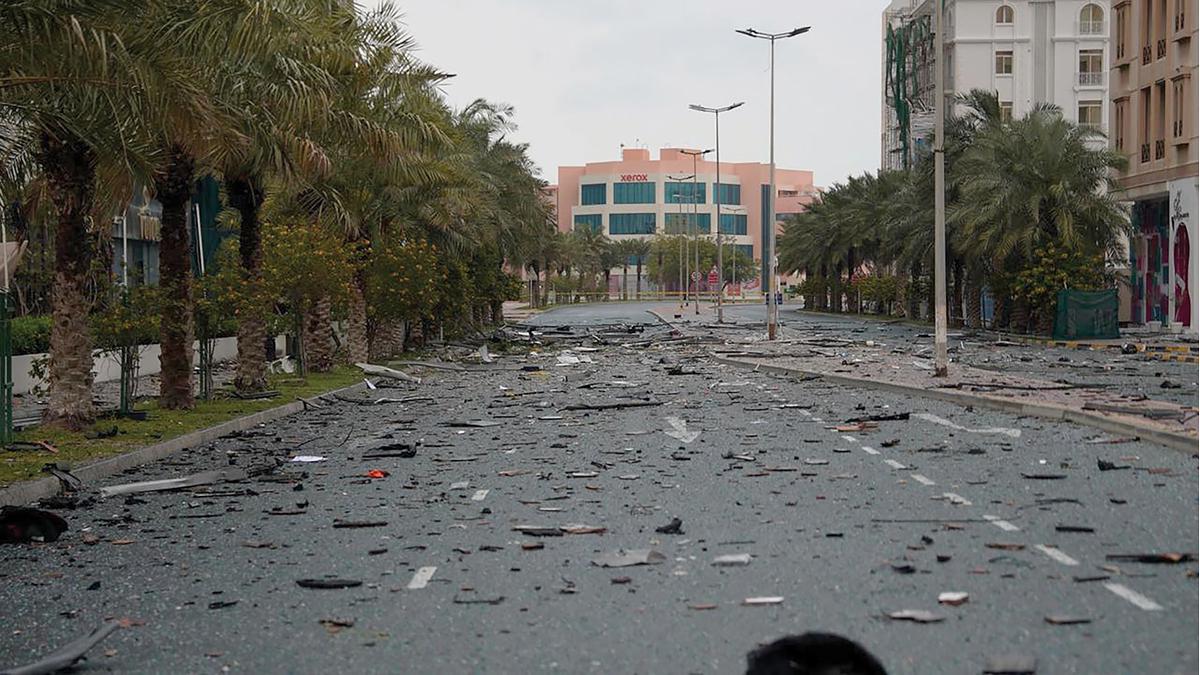
Bahrain Press Association – Thursday, March 26, 2026 – London, United Kingdom: In the aftermath of the military conflict between the United States and Israel on one side and Iran on the other since late February 2026, accompanied by missile and drone attacks targeting Bahraini territory, the country has witnessed a noticeable escalation in restrictions on both public and digital spaces. This has taken the form of a widespread arrest campaign affecting citizens and residents.
The Bahrain Press Association issues this report to document the key developments related to these arrests, analyze the legal framework relied upon by the authorities, and emphasize that safeguarding national security and respecting standards of justice and freedom of expression are not necessarily conflicting paths. Rather, a balanced approach between them enhances the state’s credibility and the integrity of its legal procedures.
The Association affirms the state’s right to take necessary security measures under exceptional circumstances such as war. However, the legitimacy of such measures is conditioned, under international law, on being clearly grounded in law, serving a legitimate aim, and being implemented in a necessary and proportionate manner, while respecting fair trial guarantees and the presumption of innocence.
As the region experiences unprecedented military escalation—resulting in at least two deaths and 46 injuries in Bahrain according to the official Bahrain News Agency—this sensitive situation requires close and constructive cooperation between security authorities and civil society institutions to overcome the crisis and mitigate its consequences.
According to the Association’s monitoring, at least 181 citizens and residents were arrested between March 1 and 24, 2026, most of them due to social media posts or participation in peaceful protests. Authorities stated that some detainees face charges related to national security. The Ministry of Interior also announced the arrest of at least 40 individuals on charges including “misuse of social media” and “sympathizing with Iranian aggression.”
On March 9, 2026, the Public Prosecution announced that it had requested courts to impose the death penalty in several related cases. Some defendants were described as committing “high treason” for photographing and نشرing sensitive locations, with authorities considering these acts as “espionage” and “collaboration with terrorist organizations, including the Revolutionary Guard.” Human rights reports and media outlets also documented the publication of photos and names of some defendants on digital platforms before final judicial rulings, raising concerns about respect for the presumption of innocence.
Article 19 of the International Covenant on Civil and Political Rights (ratified by Bahrain) guarantees the right to freedom of expression, including online expression and access to information. Paragraph 3 of the same article permits restrictions only under strict conditions: they must be provided by clear law, serve a legitimate aim such as protecting national security or public order, and be necessary and proportionate to the threat.
General Comment No. 34 by the UN Human Rights Committee clarifies that when restricting freedom of expression, the state must specifically and individually demonstrate the nature of the threat and establish a direct and immediate connection between the expression in question and the alleged danger. Available information so far—including cases related to mourning posts or documenting attack impacts—suggests that this test has not been sufficiently applied in several instances.
Regarding the death penalty, expanding its application to cases involving only online content publication or photography contradicts international human rights principles. The Arab Charter on Human Rights, to which Bahrain is a party, states that the death penalty may only be imposed for “the most serious crimes” and must not be applied to political offenses. The Human Rights Committee further clarifies that “most serious crimes” should be interpreted narrowly as those involving intentional killing.
Additionally, international conventions prohibit imposing the death penalty on individuals who were under 18 at the time of the alleged offense, and minors must not be treated under the same criminal responsibility standards as adults. In light of reports of minors being detained for acts potentially linked to lack of awareness about the risks of publishing or photographing, the Association stresses the need to handle such cases within juvenile justice frameworks and alternative, rehabilitative measures.
What is happening cannot be understood in isolation from the broader context of press freedom and expression in Bahrain. Reports by international and national human rights organizations have documented ongoing restrictions on media, journalists, and online activists, as well as the continued use of security, anti-terrorism, and cybercrime laws to criminalize forms of peaceful expression. Human Rights Watch recently stated that Bahraini authorities are “using the cover of war to tighten their grip on peaceful opposition and residents, including migrant workers.”
In light of the above, the Bahrain Press Association emphasizes that addressing national security challenges does not require sacrificing principles of justice and freedom of expression. Adherence to these principles is a political and legal asset for the state, not a burden. The fundamental distinction lies between policies targeting actions that constitute a documented and serious threat, and the use of severe criminal tools against peaceful expressions—including expressions of grief, political opinion, or documentation of events.
Bahrain is obligated under its international commitments—particularly the ICCPR and the Arab Charter on Human Rights—to demonstrate, on an individual and objective basis, a direct link between any restricted expression and a real, tangible security threat, and to show that the imposed restrictions are the least intrusive and necessary means to achieve a legitimate aim. Adopting this approach distinguishes a rule-of-law state that protects its citizens in times of crisis from one that uses security fears to restrict public space and shrink civil society.
Recommendations
First: To Bahraini Authorities
- Immediately and unconditionally release all individuals detained for peaceful expression, including mourning posts, opposition to war, or criticism of foreign military presence, provided no explicit incitement to violence or criminal participation is involved.
- Guarantee detainees’ immediate access to communication and refrain from prolonged solitary confinement, as it undermines fair trial guarantees and may amount to enforced disappearance.
- Treat minors in accordance with international juvenile justice standards and avoid imposing adult-equivalent charges or penalties.
- Adhere to the three-part test for restricting freedom of expression under Article 19(3) of the ICCPR: legality, legitimate aim, and necessity/proportionality, with detailed individual justification in each case.
- Cease seeking the death penalty in cases limited to online publication or photographing locations.
- Refrain from publishing names or photos of defendants before final judicial rulings, in respect of the presumption of innocence and personal privacy.
- Enhance transparency by issuing regular official data on detainee numbers, reasons for arrest, charges, and legal status.
- Establish clear, publicly available guidelines for enforcing digital expression laws during crises to prevent arbitrariness or discrimination.
- Review official and media discourse and avoid accusatory or sectarian language such as “traitors” or “fifth column,” which fuels division and undermines trust in justice.
Second: To Citizens and Residents
- Comply with official instructions regarding sensitive sites, including refraining from photographing or publishing images of military or security facilities.
- Adopt responsible, inclusive national discourse and avoid sectarian incitement, hate speech, or calls for violence.
- Verify information before sharing, especially during crises, to reduce misinformation risks.
- Use available legal channels to file complaints with national human rights institutions or UN mechanisms when facing violations related to freedom of expression or peaceful assembly.